Trademark Monitoring vs. Trademark Search: What’s the Difference?

Published on October 19, 2026 | Updated on October 21, 2026
Estimated Read Time: 8 minutes

Key Takeaways
- A trademark search is generally a point-in-time review.
- Monitoring is ongoing and focuses on later filings.
- Search is most useful before filing, launching, or rebranding.
- Monitoring may help established trademark owners spot relevant new applications.
- Neither process guarantees registration or proves infringement.
- The USPTO examines applications but does not provide private trademark-monitoring services.
Quick Answer: A trademark search looks for potential conflicts that already exist, usually before you file or invest heavily in a brand. Trademark monitoring watches for potentially relevant new filings that appear later. Search looks at the existing landscape. Monitoring watches how that landscape changes.
Trademark search and monitoring solve different problems in the trademark lifecycle. In 2026, that distinction matters as federal filing activity continues to grow. Through the midpoint of fiscal year 2026, the USPTO received 431,734 trademark application classes, 7% more than during the same period in fiscal year 2025.
With new applications continually entering the system, a search helps you evaluate potential conflicts before committing to a mark, while monitoring helps you stay aware of potentially relevant filings afterward. Understanding when each tool is useful can help you make more informed branding and trademark decisions.
Trademark Search vs. Trademark Monitoring at a Glance
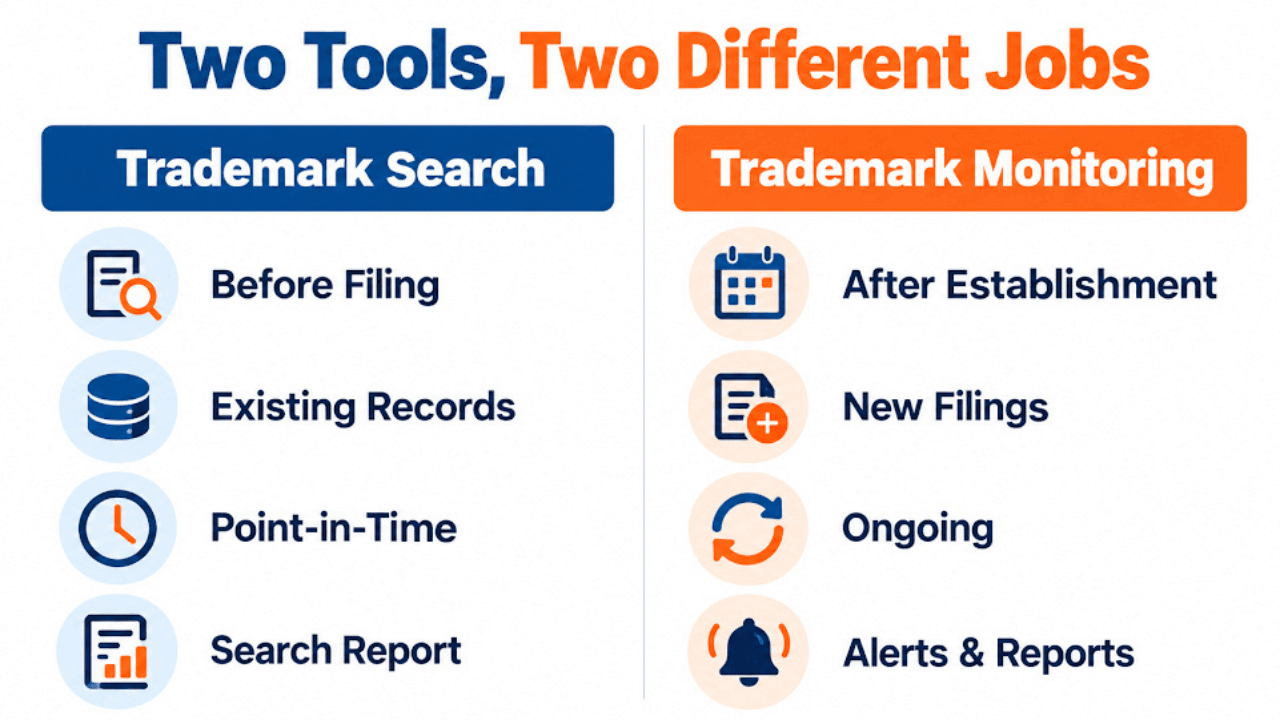
A trademark search evaluates what may already conflict with your proposed mark. Monitoring looks for potentially relevant filings that appear after your mark is established.
| Trademark Search | Trademark Monitoring |
|---|---|
| Evaluates what may already conflict with your proposed mark. | Looks for potentially relevant filings that appear after your mark is established. |
The two processes are therefore complementary rather than interchangeable.
How to Evaluate Conflicts?
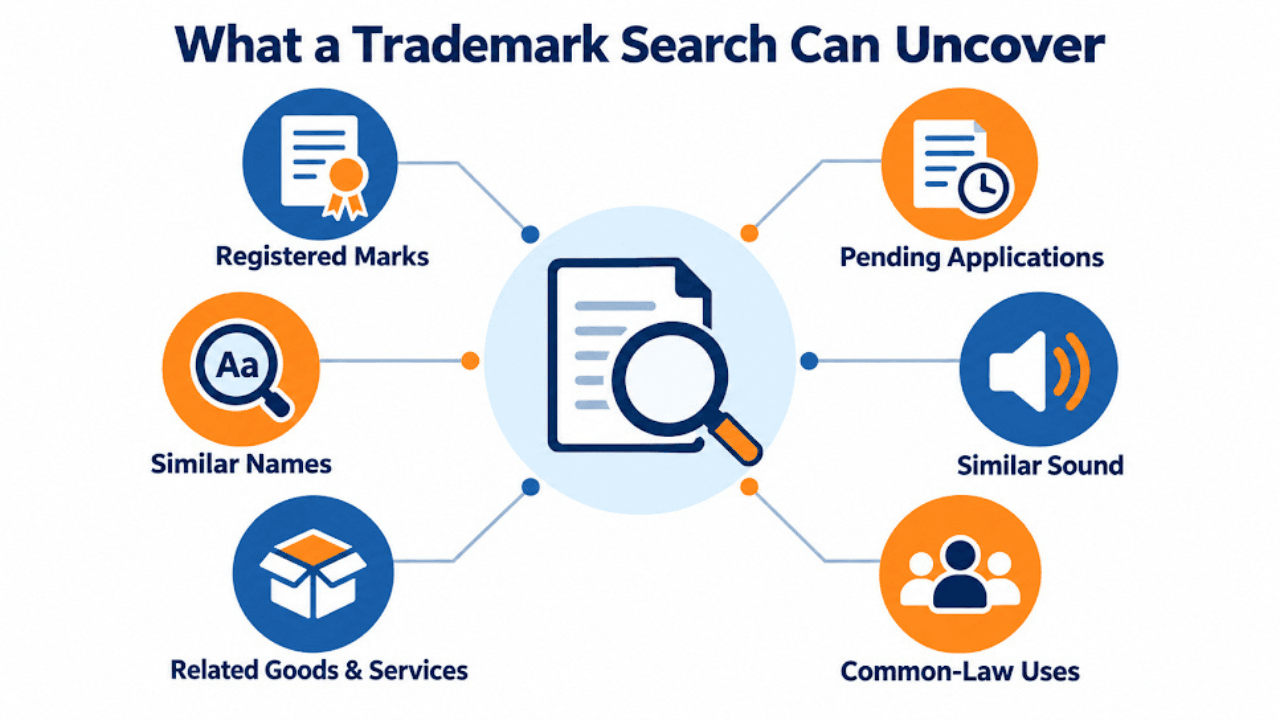
Depending on its scope, a search may identify:
- registered federal trademarks;
- pending federal applications;
- identical or similar wording;
- spelling variations;
- similar pronunciation;
- related goods and services;
- similar commercial impressions;
- state trademark records; and
- common-law uses.
An exact-name search alone may not be enough.
For example, a proposed mark such as SUNNEST could deserve further review if another mark has a similar sound, appearance, meaning, or commercial impression and covers related products.
The USPTO explains that marks need not be identical to create a likelihood-of-confusion issue.
Preliminary Search vs. Comprehensive Search
A preliminary search and a comprehensive search differ mainly in depth.
A preliminary or knockout search typically checks for obvious conflicts early in the naming process.
A comprehensive search may review a wider range of records, including federal, state, common-law, corporate-name, or other relevant sources depending on the service.
Trademark Engine's Comprehensive Trademark Search reviews available federal, state, and common-law records for potentially similar marks.
A broader search can provide more information before you invest in a trademark application, website, packaging, advertising, or other brand assets.
What Is Trademark Monitoring?
Trademark monitoring is an ongoing process that watches for potentially relevant new trademark filings after a mark has been established.
Unlike a search, monitoring does not primarily answer whether a name is available before launch. Its purpose is to help identify later activity that may deserve attention.
What Developments Can Trademark Monitoring Reveal?
Depending on the service, monitoring reports may highlight:
- New filings: Applications involving potentially similar marks.
- Relevant changes: Updates to application status or publication.
- Potential concerns: New applications involving related goods or services.
For example, if another business files a similar mark for products related to yours, a monitoring alert may help you identify that filing for review.
Trademark Engine's Monitoring service provides information about potentially similar new filings. Learn more about what trademark monitoring actually tracks.
Monitoring coverage varies by service and does not necessarily include websites, social media accounts, or ecommerce marketplaces.
When Should You Search, Monitor, or Use Both?
Use a search when you are making a new branding decision. Consider monitoring when you already have an established mark and want awareness of new filings.
| Situation | Better Starting Point |
|---|---|
| Choosing a new business name | Trademark search |
| Preparing a federal application | Trademark search |
| Launching a product line | Trademark search |
| Rebranding a business | Trademark search |
| Expanding into a new category | New search |
| Own an established registered mark | Consider monitoring |
| Want alerts about later similar filings | Monitoring |
| A potentially similar application appears | Review the filing |
For some businesses, both processes may be useful at different stages.
What Should You Do After Receiving a Monitoring Alert?
A trademark monitoring alert identifies a filing that may deserve attention. It does not automatically establish infringement or mean you must challenge the application.
Before deciding whether to act:
- Review the filing: Check the applicant, mark, goods or services, and filing status.
- Evaluate the similarities: Consider whether the marks and products could create consumer confusion.
- Check publication status: Determine whether the application has reached the opposition stage.
- Consider professional guidance: If the filing raises a significant concern, consult a qualified trademark attorney about your options.
Example: Suppose you own a skincare brand called SUNNEST and receive an alert about a newly filed application for SUNNESTA covering similar beauty products. You can review the application to assess the similarity between the marks, the related products, and the filing status before deciding whether further action is appropriate.
The USPTO generally provides a 30-day opposition period after publication in the Trademark Official Gazette. Extensions may be available under applicable rules.
Reviewing alerts promptly can help you assess potential conflicts and consider available options before important deadlines pass.
Does the USPTO Search or Monitor Your Trademark for You?
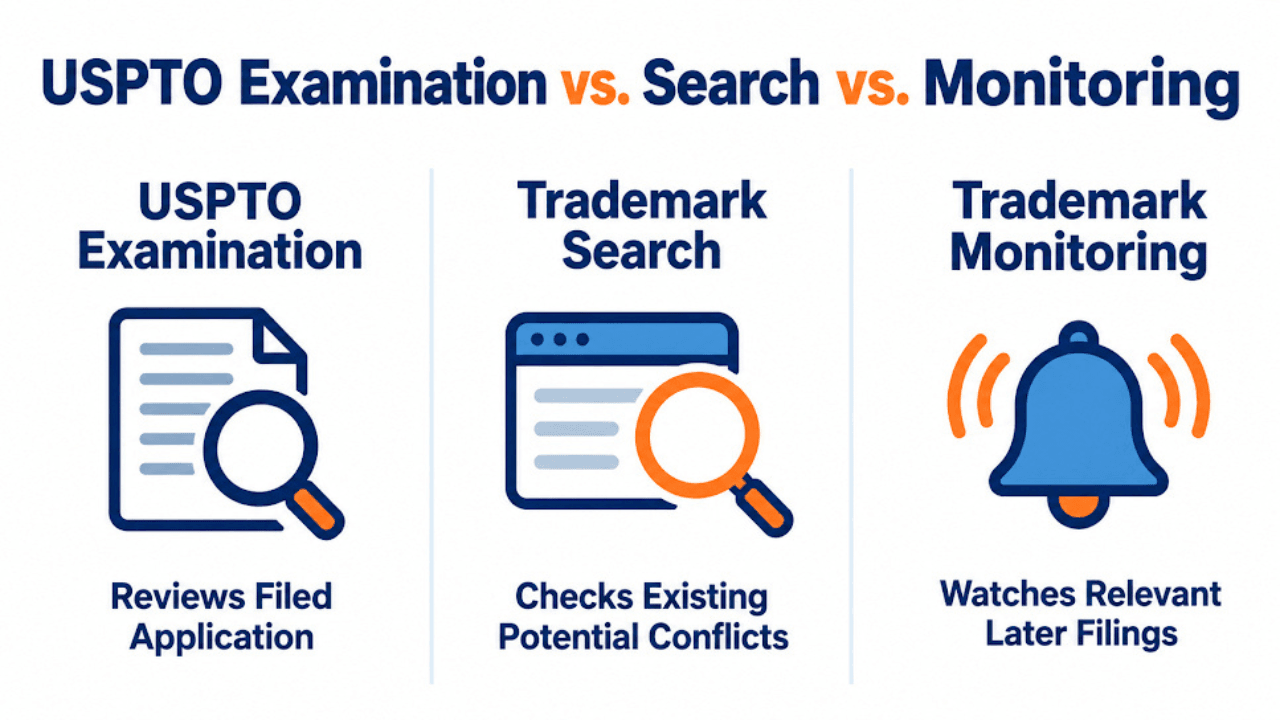
The USPTO examines federal trademark applications for conflicts, but that examination differs from conducting a comprehensive private search or monitoring a mark for its owner.
When an application is examined, an examining attorney searches for earlier registered or pending federal marks that may create a likelihood-of-confusion issue.
The USPTO also states that it does not provide trademark monitoring or similar services.
The distinction is:
- USPTO Examination: The agency reviews a filed application.
- Trademark Search: You investigate potential existing conflicts.
- Trademark Monitoring: You watch for relevant later filings.
Keeping these processes separate avoids the common assumption that federal registration automatically includes continuous monitoring.
Why Can Timing Matter After a New Filing Appears?
Timing may matter because trademark applications move through defined stages at the USPTO.
After an application is approved for publication, it appears in the Trademark Official Gazette. Publication starts a 30-day opposition period during which a person who believes registration may harm them can file a Notice of Opposition.
What Can Neither Search Nor Monitoring Guarantee?
Neither service can determine every legal outcome.
A trademark search or monitoring service cannot automatically:
- guarantee USPTO registration;
- prove trademark infringement;
- guarantee success in an opposition;
- identify every future conflict;
- establish actual consumer confusion; or
- replace legal analysis in a complex dispute.
These services provide information that may support better decisions. They should not be presented as guarantees of registration, enforcement, or legal success.
Conclusion
Trademark search and monitoring serve different stages of brand protection. A search helps you investigate potential conflicts before filing or investing heavily in a mark, while monitoring helps you stay aware of relevant new filings afterward. Neither guarantees a legal result. Using search at the beginning and considering monitoring later can provide more useful information as your brand and the trademark landscape evolve.
Choose the Right Tool for Your Trademark Stage
If you are still choosing a name or preparing to file, Trademark Engine can help you review existing records before moving forward.
Trademark Engine Editorial Team
Frequently Asked Questions
Sometimes. Similar marks may coexist when the goods or services, commercial impressions, and other relevant circumstances do not create a likelihood of confusion. Each situation requires individual assessment.
Not necessarily. Filing-monitoring services generally focus on trademark application activity. Social media accounts, domain names, advertisements, and marketplace listings may require separate brand monitoring.
Review the marks' similarities, related goods or services, and relevant prior rights. A similar result does not automatically mean your proposed mark is unavailable, but significant conflicts may justify further legal review.
An opposition generally becomes available after an application is published in the Trademark Official Gazette. The standard opposition period is 30 days, and extensions may be available under USPTO rules.
No. Federal trademark registration does not automatically provide a private monitoring service. Trademark owners can consider separate monitoring based on their business needs and the importance of their marks.
Get Trademark Tips and Compliance Guidance
Subscribe for updates, insights, and resources that help you stay compliant and grow your mission.